


Félix Pago
4.6868.00 Reviews
App Specs
- Version
- 1.1.14
- Updated On
- License
- Free
- Downloads
- 100,000+
- Developer
- Félix Pago
- Categories
- Finance
- Platform
- Android
Screenshots
 Analysis by AppCompare
Sending money from the United States can be surprisingly complicated when the person receiving it needs a simple, practical way to get support. Félix Pago is a finance app from Félix Pago built around that basic problem. I found its appeal less in having a long list of financial tools and more in trying to make one particular task feel less intimidating: arranging a transfer from the United States without forcing the sender to navigate a traditional banking workflow.
That narrow focus matters. This is not an app I would describe as a complete replacement for a bank, a budgeting suite, or a general-purpose digital wallet. It is better understood as a focused money-transfer service. The app is free to install, carries an Everyone content rating, and has reached over one hundred thousand installs. Its current version is 1.1.14, and it supports devices running Android 7.0 or later.
After spending time looking at the experience from a practical user’s point of view, I came away with a clear impression: Félix Pago can be useful when the priority is sending money from the United States with as little friction as possible, but the right choice still depends on the recipient’s situation, the transfer details shown before confirmation, and whether you need broader financial features.
What Félix Pago is really for
The app’s central promise is easy to understand, but the real value comes from how that promise fits into everyday life. Imagine a relative in the United States who wants to help someone back home with rent, groceries, school costs, or an unexpected bill. The sender may not want to open a new bank account, learn a complicated international-transfer process, or ask the recipient to install several different services. A focused transfer app can make that moment feel more manageable.
I would place Félix Pago in the same general decision area as remittance services, bank transfers, and digital wallets, but its personality is different from a full banking application. A bank usually gives you a much wider financial relationship: account management, statements, cards, savings tools, and other services. A wallet may be convenient for moving money between users inside its own network. A remittance service, meanwhile, is judged primarily by how clearly and reliably it handles sending money across borders.
That distinction helps set expectations. If you are looking for a place to manage your entire financial life, this app is probably too specialized. If you want a direct route for sending money from the United States, its focused design is much more relevant. I appreciate apps that do not pretend to solve every financial problem, provided they make their main job clear.
The developer is Félix Pago, and the app’s public reception is encouraging without being overwhelming. It holds an average rating of 4.5 from around one thousand six hundred ratings, with more than eight hundred written reviews. I treat those figures as a useful sign that many people are finding the experience worthwhile, but not as a guarantee that every transfer will feel identical. Money apps are especially sensitive to personal circumstances, recipient location, verification steps, and the exact route used for a transaction.
Worth Reading Before You Choose

EA SPORTS FC Mobile 26 Is a Bigger Football Game, but It Takes Time

Flipboard Shows What News Apps Must Do Beyond the Feed

Switching to Android Auto Means Rethinking Your Driving Routine

Google Calendar Makes a Crowded Week Easier to Manage

Ludo King Makes the Most of the Minutes Between Plans

Baby Panda World Brings Quick Play to Modern Phones, but Its Game Library Feels Busy
How I would approach the first transfer
My advice is to treat the first use as a small test rather than immediately relying on it for an urgent, high-value payment. Start by checking the recipient’s details carefully, read every amount and confirmation screen, and make sure the receiving person understands how the money will arrive. This is not a criticism unique to Félix Pago; it is simply good practice whenever money crosses borders.
A useful habit is to keep the recipient’s information in one place before opening the app. That reduces the chance of switching between messages while entering names, numbers, or account details. I would also avoid sending money while distracted or rushing. A simple interface can reduce unnecessary work, but it cannot correct a wrong recipient detail after confirmation.
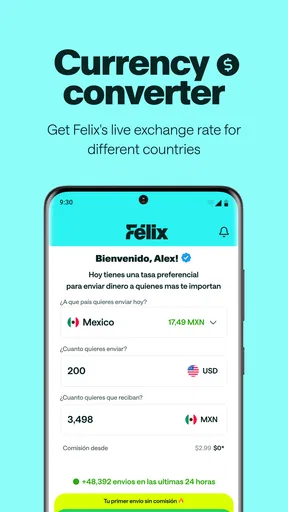
Another practical tip is to compare the final amount the recipient receives, not just the amount the sender enters. Transfer costs and exchange rates can change the real value of a payment, so the meaningful question is always how much arrives and through which method. If the app presents a summary before sending, that is the screen I would study most carefully.
What you get without paying for the app
Félix Pago is free to download, which removes an important barrier for someone who only wants to try the service. That is the clearest verified cost advantage: you do not need to purchase the app before deciding whether its workflow suits you. For a money-transfer tool, free access is helpful because users can inspect the experience before committing to a regular habit.
Still, free installation should not be confused with every possible transfer being free. The app’s purchase status tells me that the application itself does not require a purchase, but it does not establish a universal fee structure for each transaction, destination, funding method, or exchange rate. I would therefore judge the value from the final transfer summary rather than assuming that “free” means the complete money movement has no cost.
This is an important difference between app price and service price. A free banking or transfer app can still involve transaction charges, currency conversion differences, or other costs connected to the specific operation. Before confirming a payment, I would look for the amount sent, any displayed charge, the exchange rate if one is shown, and the amount expected by the recipient. If those details are clear, the free download becomes a genuine advantage. If they are difficult to understand, the lack of an app price matters much less.
For occasional senders, this approach is sensible. You can install the app, explore the process, and decide whether the quoted result works for your needs. For frequent senders, the calculation should be more deliberate. A small difference on one transfer can become meaningful over many months, so I would compare Félix Pago with a bank transfer or another remittance provider based on the total received, speed, convenience, and recipient access—not on the download price alone.
Where the value appears in real life
The strongest use case I see is a person in the United States who regularly helps family members or friends in another country and wants a dedicated route rather than a complicated bank interface. The app’s stated focus on simplicity and speed makes sense for that situation. When someone needs to send support after a medical expense or before a household bill is due, reducing the number of confusing steps has practical value.
There is also value in repeatability. Once a sender understands the workflow and knows what information the recipient needs, future transfers may feel less like a research project. I would still verify the details every time, but a focused app can become easier to remember than a general banking platform with many unrelated menus.
A less obvious benefit is that a dedicated transfer workflow can help separate remittances from everyday spending. In a traditional bank account, an international payment may sit among card purchases, bill payments, and transfers. A specialized app gives the sender a clearer mental category: this action is for sending money to someone else. That clarity can make it easier to review what was sent and why.
There is a trade-off here, though. Specialization is useful only if the service supports the recipient’s actual needs. Before depending on it, I would confirm how the recipient can access the funds and whether that method is convenient for them. The sender’s experience is only half of a remittance. A fast, simple sending screen does not help much if the receiving person faces an inconvenient collection or account process.
Comparing it with familiar alternatives
Compared with a traditional bank, Félix Pago may feel more approachable for a single international transfer. Banks are often stronger when you already have an established account, need detailed records, or want many financial services in one place. They may also be preferable for people who want their transfers managed alongside savings, cards, and recurring payments. The downside is that a bank’s broader structure can make a one-off remittance feel buried in menus and instructions.
Compared with a general digital wallet, Félix Pago’s advantage is its specific purpose. A wallet can be excellent when both people already use the same platform for everyday payments, but its usefulness may depend on that shared ecosystem. A transfer-focused service is potentially a better fit when the sender’s main goal is moving money from the United States to someone who is not part of the sender’s normal payment circle.
Compared with an established remittance provider, the decision becomes more detailed. A larger service may offer more destination options, more delivery methods, physical locations, or a longer history in the market. Félix Pago may be more attractive when its process is easier for your particular route. I would not choose solely because the screens look simpler; I would compare recipient access, total cost, timing, support, and the clarity of the confirmation information.
One useful way to make that comparison is to run the same hypothetical transfer through each option without sending it. Record the amount the recipient would receive, the stated cost, the estimated timing if displayed, and the steps required from the recipient. This takes a few minutes and reveals whether Félix Pago’s convenience is worth choosing for your specific corridor.
Trade-offs I noticed before making it a regular service
The first limitation is scope. Félix Pago is not the app I would recommend to someone who wants investing, spending analysis, loan management, a physical card, or a full bank account. Its value depends on needing its particular transfer function. A focused tool can be refreshing, but it also means you may need another app for almost everything else.
The second limitation is that speed and simplicity should not replace careful review. A sender may be tempted to tap through quickly because the whole point is convenience. With financial transactions, that instinct needs to be controlled. I would slow down at the recipient and final-total stages, especially when sending to someone for the first time.
The third trade-off concerns price transparency in practice. The app is free to install, but the economically important figure is the amount that arrives after any applicable costs and currency conversion. Because that result can depend on the transfer itself, I would never make a blanket assumption that Félix Pago is always cheaper than a bank or another provider. Its best value may be convenience, not necessarily the lowest possible cost in every situation.
There is also a human limitation: the sender may understand the app while the recipient does not. Before sending, I would explain what the recipient should expect and what information they may need. This small step prevents a common remittance problem—money arriving successfully but remaining unused because the recipient is unsure what to do next.
For urgent payments, I would prepare a backup plan. That does not mean I expect Félix Pago to fail; it means urgent financial support deserves more than one possible route. If the recipient needs funds immediately for a time-sensitive expense, check the available delivery details before sending and avoid waiting until the last minute to discover that the chosen method is unsuitable.
Questions I would answer before recommending it
Is it suitable for a first-time sender? Yes, if that person is comfortable checking transaction details and has the recipient’s information ready. The focused purpose should make the learning curve less intimidating than a broad banking platform, but first-time users should still begin carefully and confirm the recipient’s instructions.
Is it a good choice for frequent family support? Potentially, especially when the same sender repeatedly sends money from the United States and values a consistent workflow. I would review the total received on several transfers before making it the default, because convenience and cost should both remain acceptable over time.
Can it replace a bank? I would say no. It can complement a bank for a particular transfer need, but it should not be treated as a complete account-management solution. Anyone who needs statements, everyday payments, savings tools, or broader financial organization will likely be better served by keeping a bank or another full-service option.
Should someone choose it solely because it is free to download? No. Free access is a good reason to test it, not enough evidence to send money through it regularly. The final transfer terms, recipient access, and overall clarity deserve more weight than the app’s download price.
Does the age rating make it broadly accessible? The app is rated Everyone, which makes it suitable from a content-rating perspective for a broad audience. That does not remove the need for an adult to understand the financial responsibility involved, and it does not mean every person or transfer situation will be eligible or appropriate.
Who gets the most value from Félix Pago
I would recommend trying it to a sender in the United States who wants a straightforward remittance-focused experience, especially if a relative or friend is waiting for practical financial help. It is also a reasonable option for someone who dislikes navigating a full bank application for a task they perform only occasionally.
The app may be particularly useful for people who want to separate sending money from their main banking routine. Keeping the purpose distinct can make the process easier to remember and review. The key is to build a careful routine: prepare recipient details, inspect the final amount, communicate with the recipient, and save the confirmation information in a secure place.
I would be more cautious about recommending it to a business that needs extensive payment records, multiple approval layers, or a broad set of financial controls. I would also hesitate for anyone whose recipient requires a very specific delivery method that the app does not clearly support during the transfer setup. In those cases, a bank or a more established remittance provider may offer a better fit.
People who compare every available service for the lowest possible cost should also test alternatives before settling in. Félix Pago’s free app access is appealing, but the best financial choice depends on the transaction details. If another provider consistently leaves the recipient with more money or offers a more convenient collection method, that option may be better even if its app feels less streamlined.
My final recommendation
My view is positive but deliberately practical. Félix Pago makes sense as a focused finance app for sending money from the United States, and its free access lowers the risk of trying the workflow. The 4.5 average rating and more than one hundred thousand installs suggest that it has found a real audience, while its Everyone rating and support for Android 7.0 or later make it accessible to many Android users.
The best reason to use Félix Pago is a clear, recurring need for a simpler United States-to-recipient transfer process—not the assumption that every transaction will automatically be the cheapest. I would install it, run through the transfer details carefully, and compare the final recipient amount with one or two familiar alternatives. If the recipient can access the money comfortably and the displayed terms work for you, the app can become a useful part of your routine.
I would skip it when you need a complete bank replacement, unusually detailed business controls, or a delivery option that is not clearly available for your recipient. In those situations, a traditional bank or a broader remittance service may be the safer choice. For the right user, though, Félix Pago offers a sensible balance: free entry, a focused purpose, and a workflow designed around one of the most common reasons people need a financial app in the first place.
Pros
- Fast money transfers through a simple mobile interface.
- Supports convenient remittance payments to selected Latin American countries.
- Recipients may receive funds directly in local currency.
- Clear transfer tracking helps users monitor payment progress.
- Useful for users without access to traditional banking services.
Cons
- Availability is limited by country
- sender location
- and transfer corridor.
- Exchange rates and fees can vary between transactions.
- Identity verification may be required before sending money.
- Transfers can be delayed by weekends
- holidays
- or compliance checks.
- Customer support options may be limited outside regular service hours.
FAQs for Félix Pago
What is Félix Pago and how does it work?
Félix Pago is a digital money-transfer service designed to help users send money internationally through a conversational, chat-based experience. Depending on the supported country and corridor, you can start a transfer by entering the recipient’s details, selecting a payment method, reviewing the exchange rate and fees, and completing the transaction. Availability and features may vary by location.
Is Félix Pago safe to use for sending money?
Félix Pago uses account verification and transaction-security measures intended to protect users and reduce fraud. However, no financial service is completely risk-free. Before sending money, confirm the recipient’s information, review the total cost and estimated delivery time, and use only the official app or website. Never share passwords, verification codes, or sensitive account details with anyone.
What countries and payment methods does Félix Pago support?
Support depends on the country where you live, the destination country, and the specific transfer corridor available in the app. Félix Pago may offer different options for funding a transfer and receiving money, such as bank accounts, cards, digital wallets, or cash pickup, but these are not available everywhere. Check the app during setup for current eligibility.
How much does Félix Pago charge, and what exchange rate will I receive?
The cost of a Félix Pago transfer can include a service fee, an exchange-rate margin, or other charges depending on the destination, payment method, transfer amount, and delivery option. The app should display the amount the recipient will receive and the total you pay before confirmation. Always review this summary carefully, since rates and fees can change.
How long do Félix Pago transfers take, and what happens if there is a problem?
Transfer speed varies according to the destination, verification requirements, funding method, weekends, holidays, and the recipient’s financial institution. Some transfers may arrive quickly, while others require additional processing. If a transfer is delayed, rejected, or sent with incorrect information, open the transaction details and contact Félix Pago support promptly. Keep your confirmation and reference information available.


